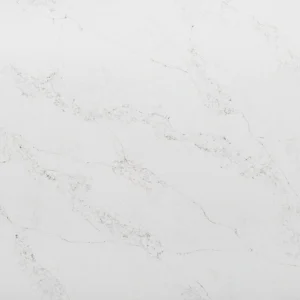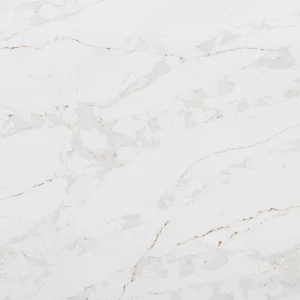




Dekton worktops are the least understood of the three main premium kitchen surfaces in the UK, and most homeowners we meet have either never heard of them or have heard one strong opinion about them without much context. Quartz dominates the conversation for engineered surfaces. Granite dominates the conversation for natural stone. Dekton sits as a third option that genuinely outperforms both in specific situations, and is the wrong choice in others. After supplying and fitting Dekton across a range of kitchens and outdoor installations from our Pudsey workshop, we can give a straight account of when it makes sense and when it doesn’t.
The industry reality
Dekton is a sintered surface manufactured by Cosentino (the same company behind Silestone). It’s produced by compressing a blend of raw materials (porcelain, glass, and natural quartz) under extreme pressure and heat, in a process that simulates the geological formation of natural stone over decades, compressed into hours.
The result is a surface that’s harder than granite, less porous than quartz, more UV-stable than either, and resistant to heat, scratches, stains, and frost. On paper, it sounds like the obvious choice for any worktop. In practice, it has specific characteristics that make it ideal in some applications and unnecessary or unsuitable in others.
The marketing around Dekton tends to focus on its superlatives without explaining when those superlatives matter. The points below put that in context.
What Dekton actually does well
Heat resistance without restrictions
Quartz worktops have a working heat tolerance of roughly 150°C before the resin in the slab begins to suffer. This is below the temperature of a pan that has just left a gas ring or a roasting tray taken straight from the oven, which is why quartz manufacturers recommend trivets.
Dekton has no resin. The sintering process produces a fully inorganic surface that handles direct contact with hot pans, pots, and trays without restriction. You can rest a roasting tin straight from the oven onto Dekton without concern. This isn’t a small difference in households where intensive cooking is genuinely daily.
For the same reason, Dekton handles outdoor kitchen applications where temperatures swing dramatically across seasons. Quartz isn’t recommended for outdoor installations in the UK because the resin can fail under UV exposure and temperature cycling. Dekton is rated for outdoor use without restriction.
UV stability across all colours
This is the area where Dekton most clearly outperforms quartz. Some quartz colours (particularly pure whites and pale designs) shift colour gradually under prolonged UV exposure, which limits where they can be placed in kitchens with substantial glazing.
Dekton’s mineral composition is fully UV-stable across the entire range. There are no colours that need to be avoided in sunlit positions, no UV ratings to check, and no risk of yellowing on an island that sits in direct light from bifold doors.
For modern open-plan kitchens with large glazing (which is now the default in UK extensions), this is a meaningful advantage. It removes one of the major design constraints that affects quartz selection.
Scratch and impact resistance
Dekton is rated harder than granite on the standard mineral hardness scale. In practice, this means it resists scratching from kitchen knives, abrasive cleaning materials, and dropped utensils more thoroughly than either granite or quartz.
This matters most in kitchens where the worktop will see heavy daily use, including commercial-style cooking, baking with direct surface contact, and households where the worktop tends to absorb the daily wear of an active family.
The flip side, like all hard materials, is that Dekton is brittle. Sharp impact on an unsupported edge can chip it, just as it can chip granite or quartz. The hardness protects against scratching and abrasion, not against impact damage at edges.
Resistance to stains and chemicals
Dekton is essentially non-porous, which means liquids sit on the surface rather than soaking in. Red wine, turmeric, coffee, oil, and beetroot wipe straight off without leaving marks. This puts it on par with quartz for everyday stain resistance, and ahead of granite (which needs sealing to achieve similar performance).
Dekton also resists chemical attack from acids that can etch other materials. Vinegar, lemon juice, and acidic cleaning products that can dull polished granite over time have no effect on Dekton. This matters in households where someone genuinely prefers vinegar-based cleaning, or where citrus is part of daily cooking.
Thinner slab options and the design possibilities they open
Dekton is manufactured in several thicknesses, including 8mm, 12mm, 20mm, and 30mm. The thinner options (8mm and 12mm) allow design applications that aren’t practical in granite or quartz.
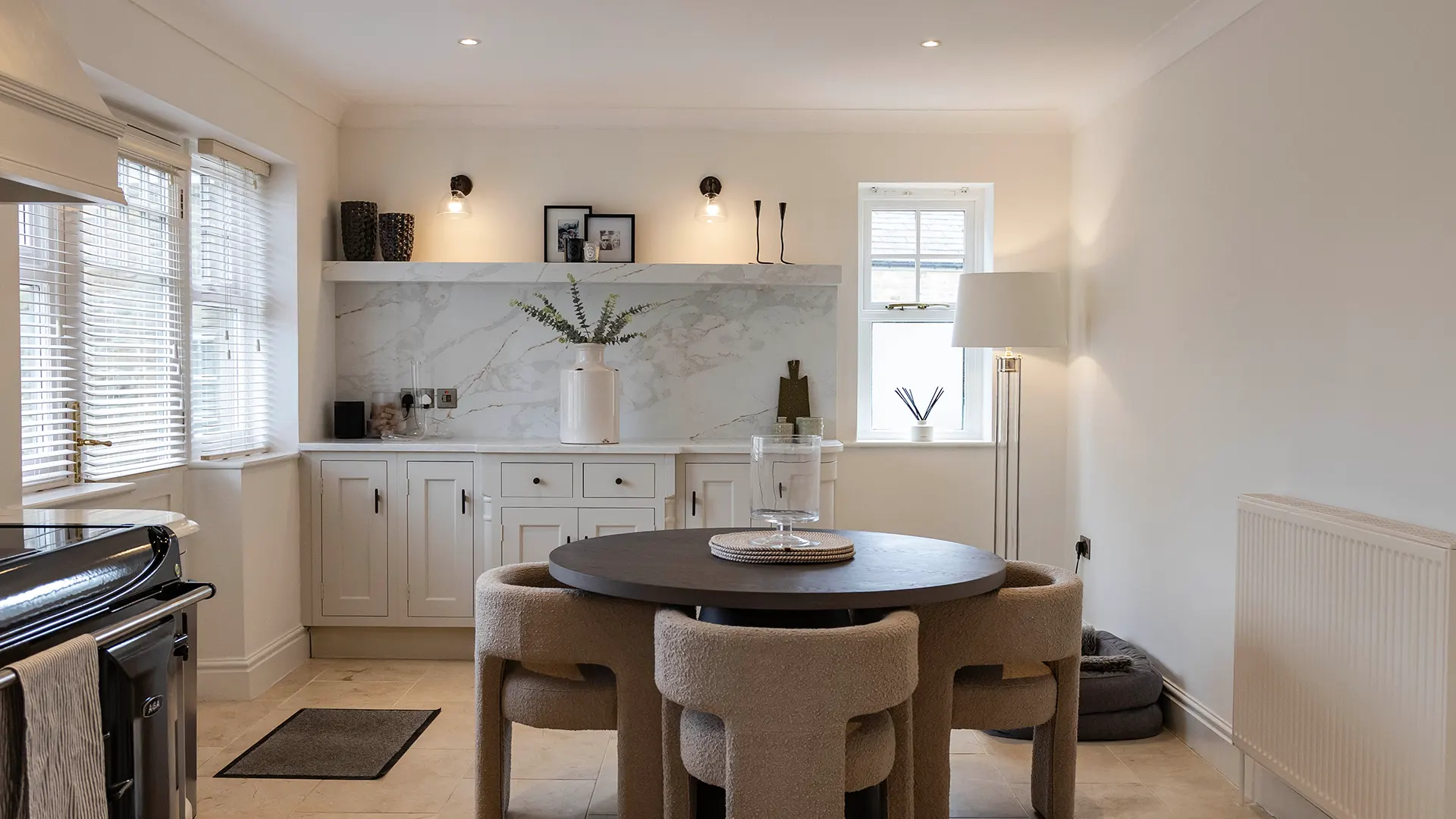
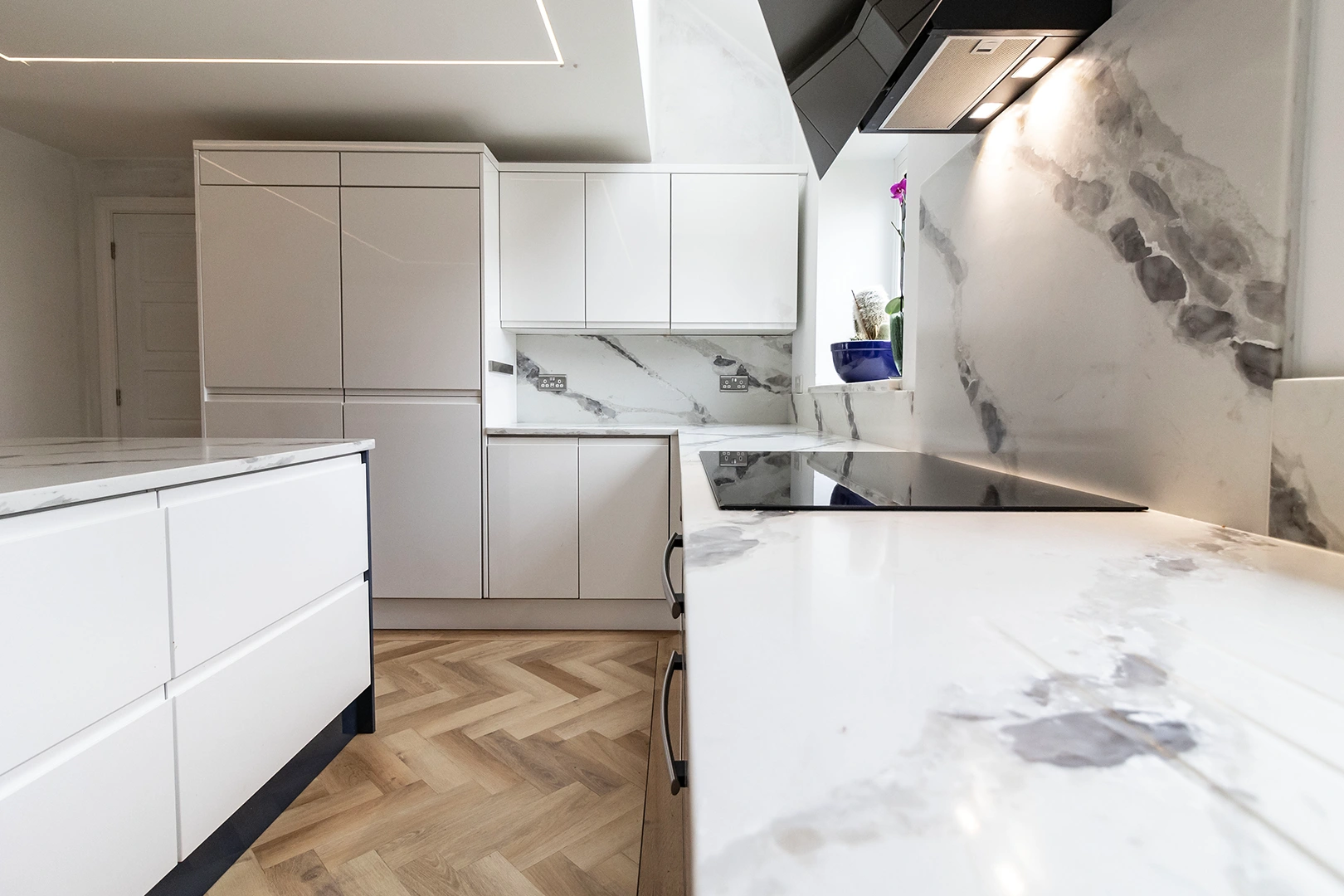
Floor-to-ceiling splashbacks in matching material, full-height wall cladding, and ultra-thin worktop overhangs are all easier to achieve in Dekton than in thicker materials. The aesthetic possibilities are genuinely different from what quartz or granite can produce.
For contemporary kitchen designs where minimalism and continuity matter (matching surfaces wrapping from worktop to splashback to wall, ultra-thin floating shelves in the same material), Dekton expands the design palette.
Outdoor and indoor-outdoor installations
This is where Dekton most clearly justifies itself over the alternatives. Quartz isn’t suitable for outdoor use in UK conditions. Granite is suitable but needs careful sealing and benefits from particular finishes for outdoor performance. Dekton is rated for outdoor use without restriction, handles UK weather without issues, and is the standard specification for outdoor kitchen worktops where stone is preferred.
For modern installations that blur the line between indoor and outdoor (a kitchen with bifolds onto a covered terrace, an outdoor barbecue area with stone counter space, an indoor worktop that continues outside as a serving surface), Dekton allows the same material to be used inside and out, which neither granite nor quartz can match cleanly.
When Dekton isn’t the right choice
Honesty matters here. Dekton isn’t the universally correct answer to every kitchen worktop question.
For a standard indoor kitchen with no outdoor extension, no exceptional cooking demands, and no design need for ultra-thin slabs or continuous wall-to-worktop surfaces, the practical advantages of Dekton over premium quartz or granite are modest. The cost premium is real, and for many households the additional performance isn’t enough to justify the cost difference.
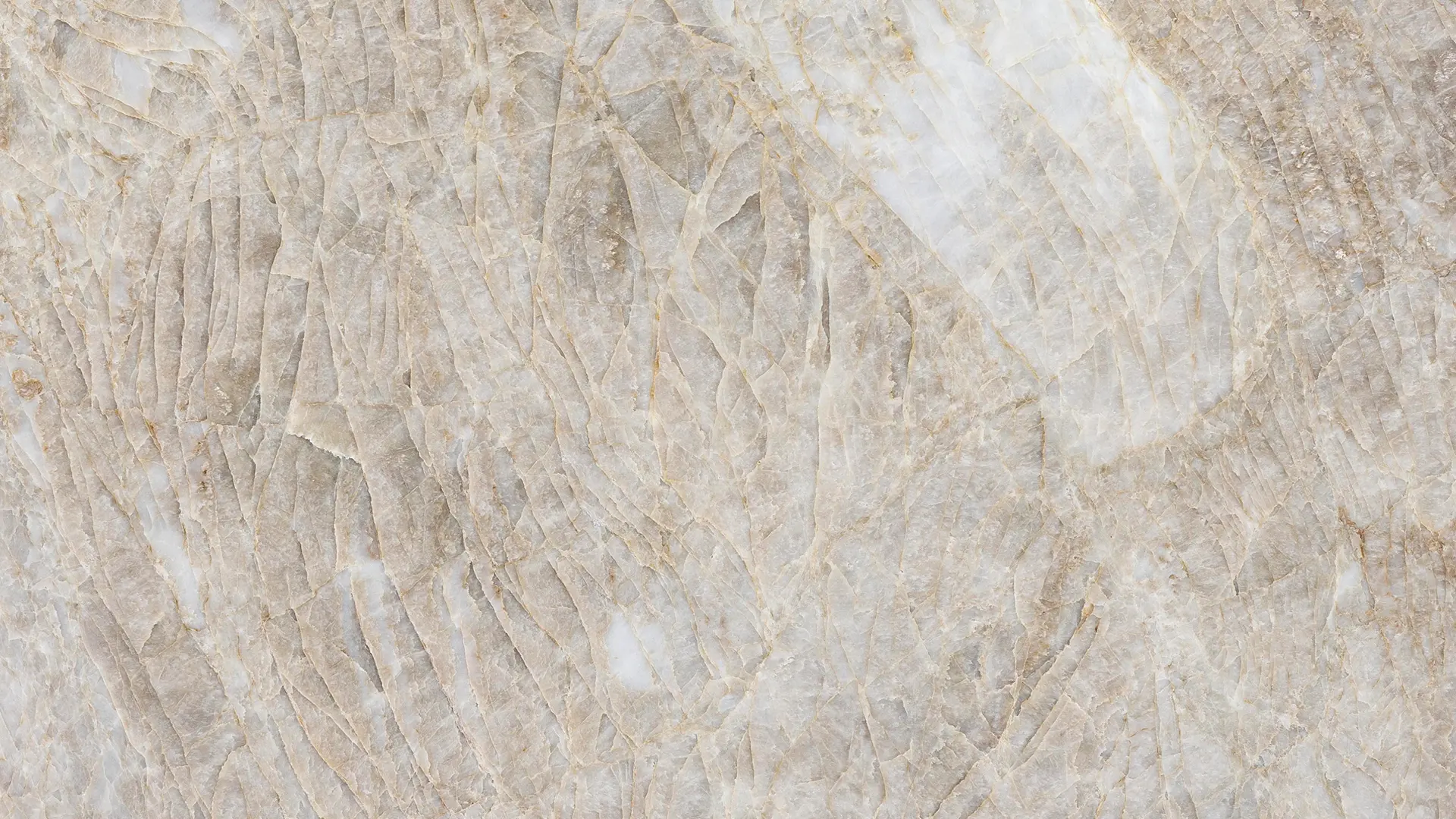
The aesthetic range of Dekton, while substantial, doesn’t match the natural variation of real granite. If you specifically want the irregular, one-of-a-kind appearance of natural stone, Dekton (which is manufactured with consistent patterns) won’t deliver that. Some Dekton designs are deliberately rustic or marble-effect, but the pattern repeats across slabs in a way that real granite doesn’t.
Dekton is also more challenging to fabricate than granite or quartz. The hardness that makes it durable also makes it more demanding to cut, edge, and polish. Not all fabricators are equipped or experienced enough to work with it well. A poor Dekton installation can show chipped edges, rough cuts, and visible tool marks that wouldn’t be acceptable in any premium material.
Real scenarios from UK installations
A family in Leeds had a kitchen extension with bifold doors and an outdoor entertaining area on the terrace beyond. They wanted a single material running from the indoor island, through the bifolds, and onto an outdoor counter for barbecues. We installed Dekton in a matching colour across all three sections, and the surface reads as continuous space across the indoor-outdoor boundary. Quartz wouldn’t have worked outside. Granite would have needed two different finishes for indoor and outdoor performance. Dekton handled both without compromise.
A property in Harrogate had a contemporary kitchen design that called for floor-to-ceiling splashbacks in matching material behind the hob run, and ultra-thin floating shelves in the same surface. We supplied 12mm Dekton for both, fabricated and installed alongside the worktop. The visual continuity across the wall, shelves, and worktop produced the architectural look the design called for, which thicker materials couldn’t have achieved.
A keen home cook in York specifically wanted a worktop that would tolerate the way he cooked: regular use of cast iron pans straight off a gas ring, stone bakeware at high temperatures, and direct contact with hot trays. We installed Dekton with a leathered finish, and three years of intensive cooking later the surface is unchanged. The same household using quartz would have built up heat damage. Granite would have performed well too, but with the maintenance overhead of resealing.
The questions worth asking before you commit
If you’re considering Dekton, the answers to these will tell you whether it’s genuinely the right choice for your kitchen:
Does my kitchen include outdoor or indoor-outdoor surfaces where I want continuous material?
Is intensive cooking with hot pans a daily reality in my household?
Does the design call for thin slabs, full-height splashbacks, or matching wall cladding?
Will the worktop sit in direct UV exposure that would limit my quartz colour choices?
Has the supplier installed Dekton before, and can they show finished examples of their work?
If most of these answers are yes, Dekton is likely justifying its cost. If most are no, premium quartz or granite will probably serve you equally well at lower cost.
How Meridian Granite handles Dekton installations
We supply and fit Dekton as part of our standard range, alongside granite, quartz, and quartzite, from our Pudsey workshop. Fabrication of Dekton requires specific tooling and experience, both of which we have in-house. Our installation teams are experienced in handling the material’s specific characteristics, including the thinner slab options that open up wall cladding and splashback applications.
Our showroom holds full slabs of Dekton across multiple colour ranges, so customers can see the actual surfaces (and feel the difference in weight and finish compared to quartz and granite) before deciding. We’re happy to discuss specific applications, including outdoor installations, indoor-outdoor continuity, and contemporary design specifications where Dekton’s properties genuinely matter.
Conclusion
Dekton worktops genuinely outperform quartz and granite in specific situations: outdoor or indoor-outdoor installations, intensive cooking environments, full-height splashback and wall cladding designs, and any kitchen where UV exposure limits quartz colour options. In standard indoor kitchens with conventional cooking demands, the performance advantages are modest and the cost premium harder to justify.
The honest position is that Dekton is the right material for some kitchens and the wrong material (or at least an unnecessary one) for others. A supplier who recommends it for every project isn’t giving you balanced advice. A supplier who can’t recommend it at all probably hasn’t worked with it.
If you’d like to see Dekton in person and discuss whether it suits your specific kitchen, our Pudsey showroom holds full slabs and our team is happy to walk through where it makes sense and where another material would serve you better.