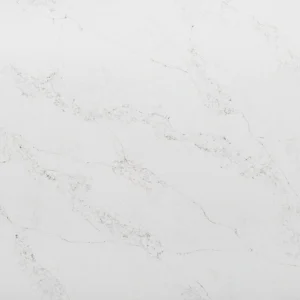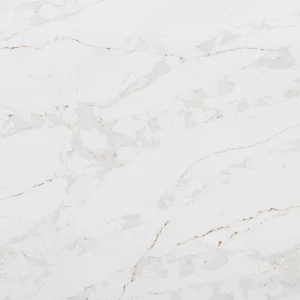



Quartzite is one of the most misunderstood worktop materials on the UK market, and the confusion starts with the name. Customers regularly come into our Pudsey showroom asking about “quartz worktops” while pointing at a quartzite sample, or asking about “quartzite” while describing engineered quartz. The two materials sound nearly identical, look superficially similar, and behave completely differently in a kitchen. After supplying and fitting quartzite across high-end installations from our Pudsey workshop, we can clear up what quartzite actually is and when it’s the right choice over its better-known cousins.
The industry reality
Quartzite is a natural stone, formed when quartz-rich sandstone is subjected to enormous heat and pressure deep underground over millions of years. The result is a metamorphic rock that’s harder than granite, often more visually striking, and significantly rarer.
Quartz worktops (engineered quartz, the kind made by Silestone, Caesarstone, Cambria and others) are a manufactured product, made by combining ground quartz with resin and pigments in a factory. The name “quartz worktop” is misleading because the product is only around 90 percent natural quartz; the rest is binder and colour. The slabs are entirely uniform across a production run.
Quartzite, by contrast, is fully natural. Each slab is unique, each block from a quarry has its own character, and the patterns can’t be replicated. This is the source of both its appeal and its complications.
The terminology problem isn’t just a customer issue. Some suppliers conflate the terms in their own marketing, and some imported slabs are labelled inconsistently between “quartzite” and “quartz” depending on the wholesaler’s preference. Understanding what you’re actually looking at requires knowing what separates the two.
What actually separates quartzite from quartz and granite
Origin and structure
Quartzite is metamorphic stone. The original quartz-rich sandstone has been recrystallised under heat and pressure, fusing the quartz grains together into an interlocking structure that’s harder and denser than the original rock. Pure quartzite is essentially fused quartz crystal.
Engineered quartz is manufactured. Ground natural quartz (typically 85 to 94 percent by weight) is combined with polyester or epoxy resin and pigments, then compressed and cured into uniform slabs. The product is consistent because it’s manufactured to be consistent.
Granite is igneous stone, formed when molten material cooled slowly underground. The crystal structure is different from quartzite, the hardness is slightly lower, and the visual character is generally more granular than the flowing patterns of quartzite.
These structural differences produce real performance differences in a kitchen.
Hardness and scratch resistance
Quartzite is one of the hardest natural stones used for worktops, rated higher than granite on the standard mineral hardness scale. In practice, this means quartzite resists scratching from knives, abrasive cleaning materials, and dropped utensils more thoroughly than granite, and comparably to or better than premium quartz.
This matters in kitchens that see heavy daily use. A quartzite worktop holds its surface finish over years of use better than most alternatives, particularly in front of the hob and along the prep area where wear concentrates.
The flip side is that quartzite is harder to fabricate. The hardness that makes it durable also makes it more demanding to cut, edge, and polish. Not all fabricators are equipped or experienced enough to work with quartzite well, and a poorly fabricated quartzite worktop can show rough edges, visible tool marks, or chipped corners that wouldn’t be acceptable in a premium installation.
Visual character that natural materials uniquely offer
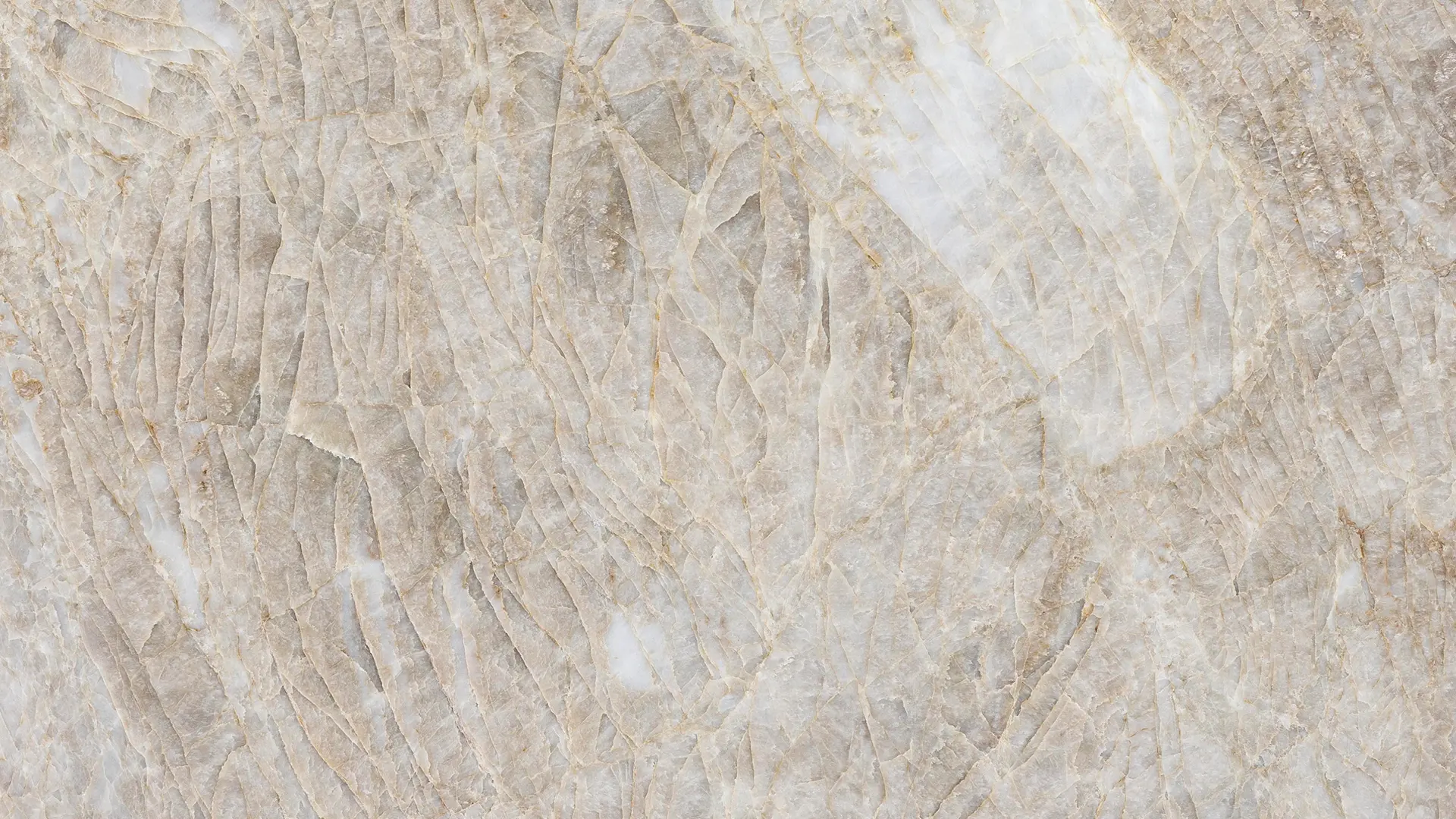
This is where quartzite genuinely outperforms both alternatives. Premium quartzite slabs (particularly those from Brazilian quarries like Taj Mahal, Mont Blanc, Cristallo, and various blue and green varieties) have a depth and movement that engineered quartz can imitate but can’t replicate.
The visual impression of looking at high-quality quartzite is of looking through the surface into the stone itself. Translucency is often visible in lighter quartzite varieties, where light passes partially through the slab and produces an internal glow that flat manufactured products can’t match.
For customers who specifically want a natural material with strong visual character, and who find engineered quartz too uniform-looking, quartzite is often the answer they were looking for without realising it existed.
Porosity and sealing requirements
Quartzite is denser and less porous than granite, but it’s not entirely non-porous like engineered quartz. Most quartzite varieties need sealing at installation and benefit from refreshed sealing every 18 to 36 months, depending on the specific stone and the level of kitchen use.
The sealing requirement is less demanding than for granite (denser quartzite varieties need less frequent attention) but more involved than for engineered quartz (which never needs sealing).
For customers willing to do occasional maintenance, quartzite’s performance under proper care is excellent. For customers who want zero maintenance and would never reseal a worktop, engineered quartz is the simpler choice.
Heat tolerance and chemical resistance
Quartzite is a natural stone with no resin content, which means it handles direct heat from hot pans without restriction. You can rest a roasting tray straight from the oven onto quartzite without concern. This puts it on par with granite and Dekton for heat tolerance, and ahead of engineered quartz.
Chemical resistance is good but not absolute. Strong acids (vinegar, lemon juice, certain cleaning products) left on quartzite can etch the polished surface over time, similar to but slightly less than on granite. Using stone-safe cleaning products and wiping spills reasonably promptly keeps the surface in good condition.
Cost and availability
Quartzite sits at the premium end of the worktop market. Standard quartzite varieties start at price points comparable to premium granite or premium quartz, and exotic quartzite (book-matched slabs, rare colours, large-format pieces) can cost substantially more than equivalent engineered products.
Availability is more limited than for granite or quartz. Major brands don’t manufacture quartzite (because it’s natural stone), so supply comes through specialist importers and wholesalers. Specific colours may have limited stock at any given time, and matching multiple slabs from the same block (essential for larger installations) requires planning at quote stage rather than at fabrication stage.
The practical implication is that quartzite is harder to specify quickly. We typically recommend customers visit the showroom or a stone yard to view actual slabs before committing, because photographs don’t capture the variation that exists between individual blocks of the same nominal colour.
The most common quartzite varieties worth knowing
Several quartzite designs have established reputations in the UK premium worktop market.
Taj Mahal quartzite has a warm cream-to-beige base with subtle veining, popular for kitchens that want a softer, traditional aesthetic.
Mont Blanc quartzite has a brighter white base with grey veining, often chosen as an alternative to Calacatta marble for customers who want a real natural stone rather than an engineered look.
Cristallo quartzite has dramatic translucency and crystalline veining, used in high-end installations where the slab is meant to be a design feature, often backlit to emphasise the internal light transmission.
Blue, green, and silver quartzite varieties have grown in popularity for kitchens making bolder design statements, often paired with copper or brass fixtures and contemporary cabinetry.
Each of these has different properties, different fabrication considerations, and different price points. The general advice is to view full slabs of any specific quartzite before committing, because the variation between individual slabs of the same nominal variety can be substantial.
When quartzite is the right choice
Quartzite makes sense when several factors align. The customer wants a natural material with strong visual character. The kitchen design treats the worktop as a design feature rather than just a surface. The household is comfortable with occasional sealing as part of maintenance. The budget allows for premium material costs and a fabricator capable of working with the stone properly.
For a centrepiece island in a high-end kitchen, a translucent backlit quartzite can produce a result that nothing else matches. For a feature worktop in a contemporary design, the natural depth of quartzite often outshines manufactured alternatives.
Quartzite is the wrong choice when the customer wants zero maintenance, when the budget is tight, when the fabricator doesn’t have experience with the material, or when the visual character of natural stone is less important than uniformity and predictability.
Real scenarios from UK installations
A property in Harrogate had a contemporary kitchen designed around a central island intended as the visual focal point of an open-plan extension. The owners had been considering Calacatta-style quartz and weren’t sure why they weren’t fully satisfied with the samples. We brought them to view a Cristallo quartzite slab in our Pudsey showroom, and the depth and translucency immediately resolved their hesitation. We backlit the finished island with concealed LEDs, and the surface reads as a feature in the room rather than just a worktop.
A family in Leeds wanted a natural stone for their kitchen but had been disappointed by the granite options shown by another supplier. Granite felt either too dramatic or too granular for the aesthetic they were after. We introduced them to Taj Mahal quartzite, which offered the warm tones and softer veining they had been looking for, and the kitchen reads as the sophisticated natural-stone installation they wanted.
A York installation in a period property wanted a worktop that would suit the existing architecture without dominating it. We sourced a Mont Blanc quartzite with subtle veining that complements the white painted cabinetry and original plasterwork, and the surface integrates into the room rather than competing with it.
The questions worth asking before you commit
If you’re considering quartzite, the answers to these will tell you whether the supplier understands the material and is the right partner for the installation:
Have you fabricated quartzite before, and can I see finished examples of your work?
Can I view the specific slabs that will be used in my installation before fabrication begins?
If multiple slabs are needed, can they be sourced from the same block for pattern continuity?
What sealing routine will the worktop need, and what products do you recommend?
Is there a single-slab option for my island, or will joins be required?
Suppliers who answer these clearly are ones who handle quartzite as a specialist material. Suppliers who treat quartzite as just another product line are usually ones who’ll fabricate it like granite and produce a disappointing result.
How Meridian Granite handles quartzite installations
We supply and fit quartzite as part of our exotic and natural stone range, working with importers and wholesalers to source specific varieties as required. Customers can view full slabs in our Pudsey showroom before committing, and we coordinate viewings at stone yards when specific quartzite varieties need to be selected from larger inventories.
Fabrication of quartzite requires specific tooling and experience, and our in-house workshop is equipped to handle the material. Installation is done by our own teams with appropriate care for the slab during transport and fitting.
Conclusion
Quartzite is a genuinely different material from engineered quartz, despite the similar name and superficial visual overlap. It’s a natural stone with exceptional hardness, distinctive visual character, and the limitations and rewards of natural materials generally.
For customers who want a high-end natural stone worktop with character that manufactured products can’t replicate, quartzite often outperforms both granite and quartz on the criteria that matter to them. For customers prioritising zero maintenance or budget control, engineered quartz remains the simpler choice.
If you’d like to see quartzite in person and compare it to the alternatives, our Pudsey showroom holds full slabs of multiple varieties and our team is happy to walk through whether it suits your specific project.