



Choosing between granite vs quartz worktops is the most common question we hear in our Pudsey showroom, and most of the advice online genuinely doesn’t help. It tends to be written by people who have never templated a kitchen, lifted a slab into a tight terraced house in Headingley, or returned to an installation five years later to see how it has aged.
After more than 15,000 kitchen projects across Yorkshire and the wider UK, our view is simple. Both materials are excellent. The question isn’t which is better in the abstract. It’s which suits your kitchen, your routine, and the way you actually live.
The industry reality nobody talks about
Most worktop comparisons read like a tick-list. Granite wins on heat, quartz wins on stains, both lose on price. That framing misses what actually happens in real kitchens.
Showrooms tend to recommend whichever material they have a stronger margin on that month. Online articles tend to be written by content agencies who have never seen a real slab. And manufacturers (understandably) lean into the strengths of their own product.
The reality is more interesting. Granite and quartz both perform brilliantly when fabricated and installed properly, and both can disappoint when they aren’t. The deciding factors are far more practical than the spec sheets suggest.
What actually matters when choosing between granite and quartz
Heat tolerance in real cooking
Granite is genuinely heat resistant. You can rest a hot pan straight from the hob onto granite without damage. We’ve done this in front of nervous customers in our showroom for years.
Quartz is not heat resistant in the same way. The stone particles themselves can take significant heat, but quartz worktops are bound together with resin, and resin discolours, scorches, or cracks well below pan temperature. The official guidance from most major quartz brands is roughly 150°C, which is below the temperature of a pan that has just left a gas ring.
For most households this isn’t a deal-breaker because trivets exist. For households where someone genuinely cooks intensively every day, granite removes a small daily risk.
Stain resistance and the sealing question
Quartz is essentially non-porous, so red wine, turmeric, beetroot, and coffee sit on the surface rather than soaking in. Most spills wipe straight off.
Granite is a natural stone, and natural stone has porosity. A well-sealed granite worktop resists stains very well, but the sealant does need refreshing roughly every one to three years depending on the specific stone and how heavily it’s used. This is a fifteen-minute job with a spray bottle, not a tradesman call-out, but it is a job.
If you genuinely won’t reseal a worktop, quartz removes that decision.
Lifespan in real homes
This is the area where the simple comparisons mislead people the most. Quartz is often sold as “lasting forever” and granite is often sold the same way. Both claims need unpacking.
We’ve revisited granite installations from twenty years ago that still look exceptional. The granite itself doesn’t really wear out within a human lifetime. What can fail is the silicone in the joints, the sealant, and the edges if something heavy is dropped on them.
Quartz has a shorter track record, simply because it hasn’t been around as long. The earliest mainstream quartz installations in UK homes are roughly twenty-five years old now, and the well-made ones from reputable brands look almost untouched. Cheap quartz from unknown suppliers is a different story, which we’ll come back to.
Aesthetics and what photographs versus what wears well
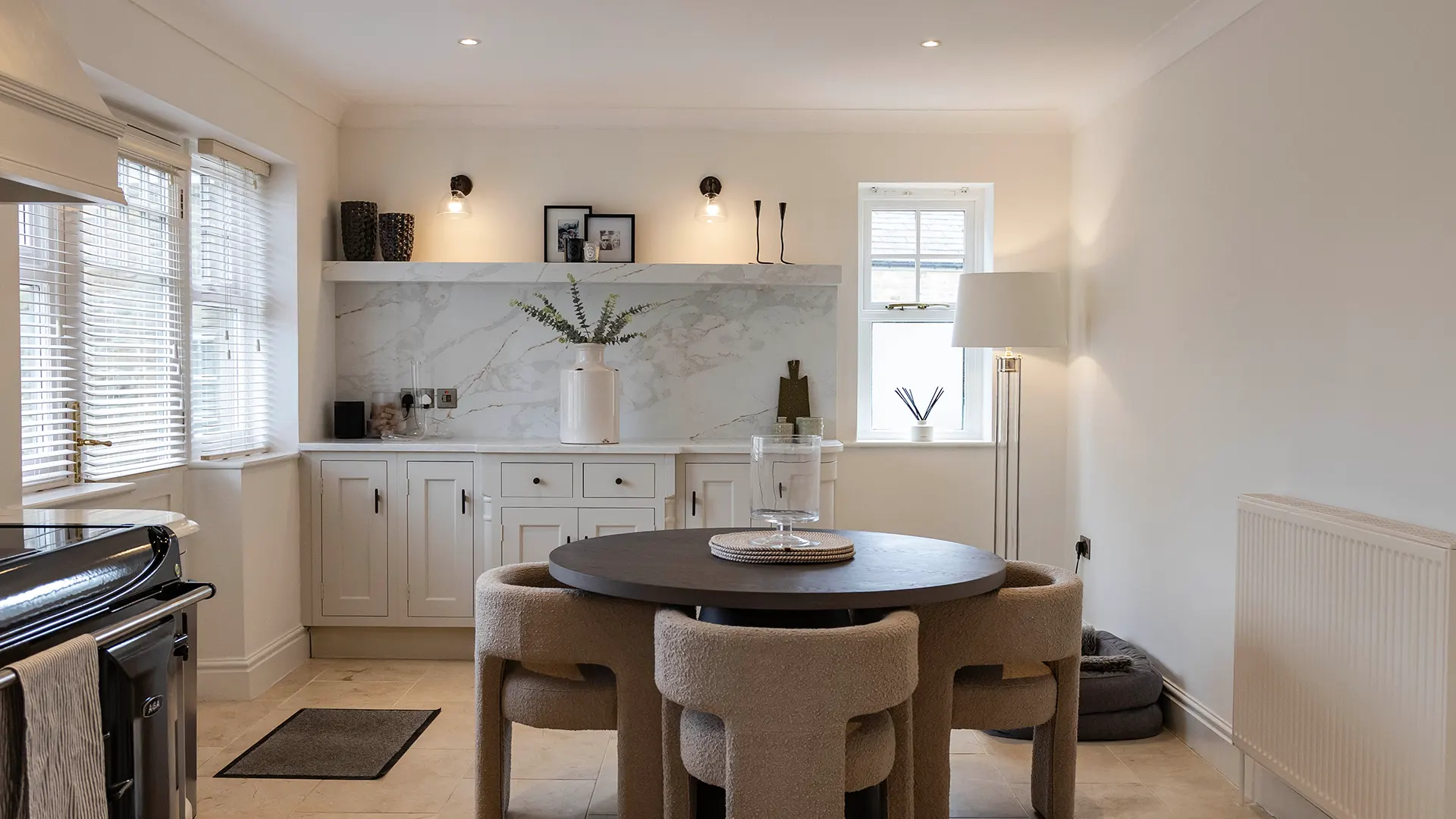
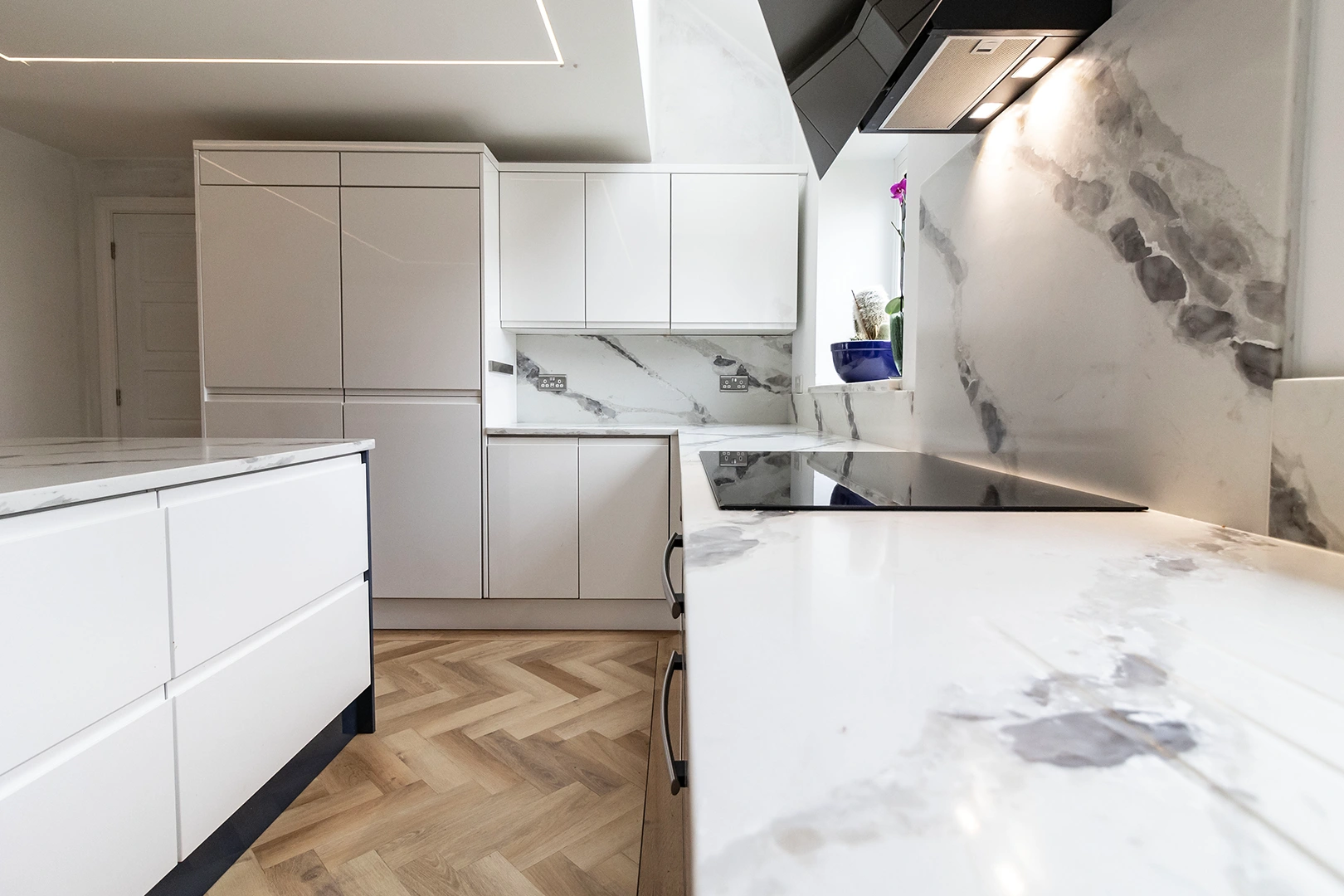
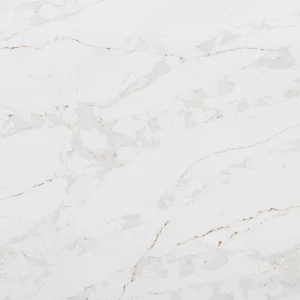
Quartz offers far more design flexibility. Calacatta-style quartz, concrete-look quartz, and pure white quartz are all manufactured products, so the pattern is consistent across slabs and predictable in the finished kitchen.
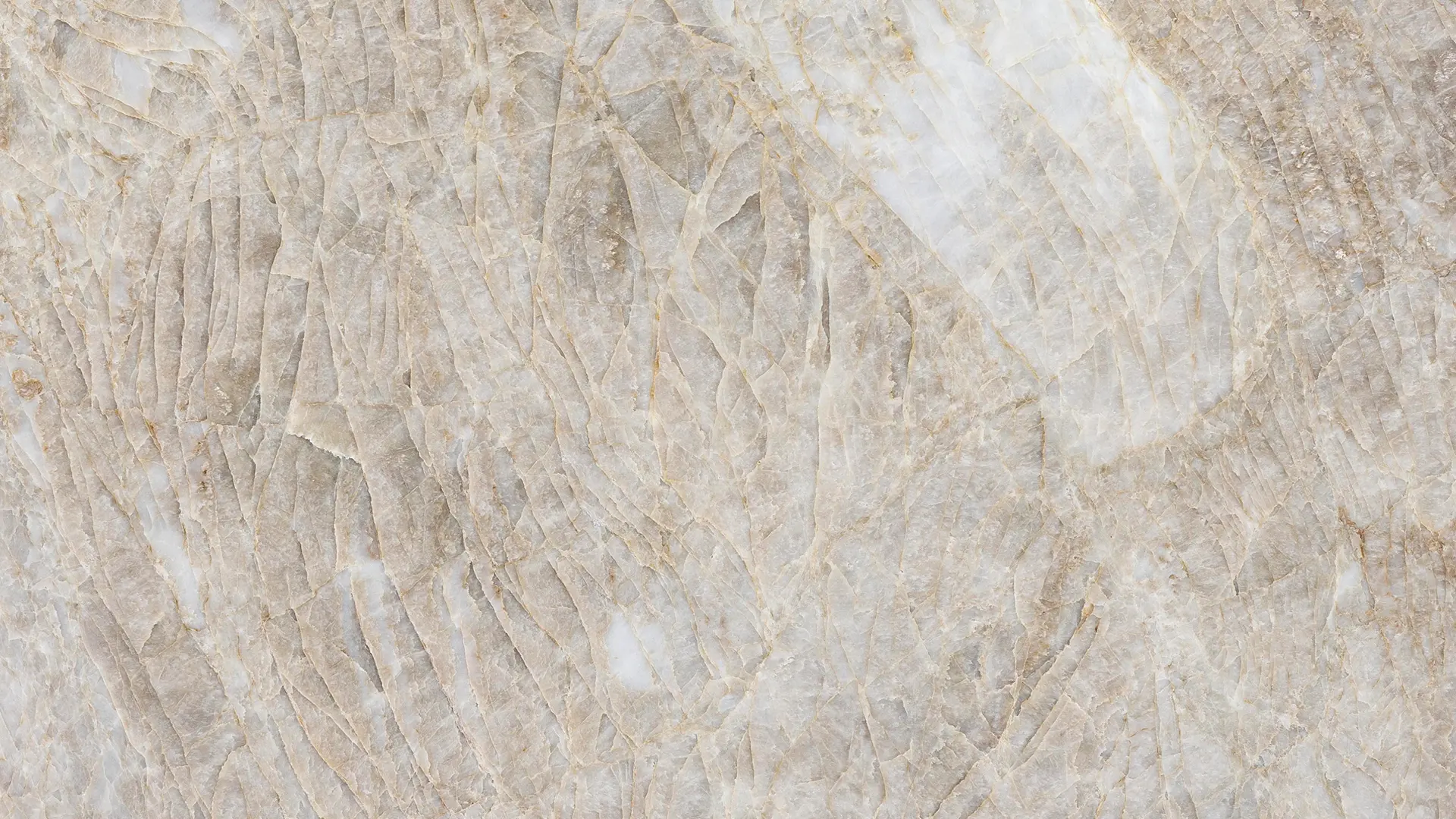
Granite is natural, so each slab is genuinely unique. The veining, movement, and crystal patterns can’t be replicated. Customers either love this or find it stressful. There is no in-between.
A practical point: very dark granites (Nero Assoluto, Steel Grey) show dust, water spots, and fingerprints more than mid-tone or lighter stones. Very pale quartz shows trace marks from dark utensils. Neither material is “low maintenance” in the absolute sense if you choose the wrong colour for the way you use the kitchen.
Cost across the full installation
Granite and quartz overlap heavily on price. Entry-level granite is often cheaper than entry-level quartz. Premium granite (exotic quartzites, book-matched slabs, rare colours) sits comfortably above premium quartz.
The bigger cost variable is the kitchen layout, not the material. An island with waterfall ends, multiple cutouts, drainer grooves, and a curved breakfast bar costs more in either material than a simple straight run. Most quotes that look cheap have stripped out the fabrication detail rather than the slab cost.
Real scenarios from Yorkshire kitchens
A family of five in Roundhay came in last year completely set on white quartz. Two of the children were under six, and the parents both worked from home and cooked from scratch most evenings. We talked them through the heat issue, and they ended up choosing a mid-tone granite with a leathered finish that hides everything and takes hot pans without a thought. Two years on, the worktop looks as good as the day we installed it.
A retired couple in Ilkley wanted granite because their previous kitchen had it and they trusted it. Their new kitchen had a large window running the full length of the worktop run, which is fine for most stones but problematic for some pale quartz colours that can shift over years of direct sunlight. They went with a polished granite, and it suits the room.
A holiday let owner in the Dales asked us specifically what we’d put in a property used by people who don’t own the kitchen. We installed quartz. The non-porous surface and the lack of sealing requirement made it the right call for a worktop that gets used by dozens of strangers a year.
The insight most homeowners miss
The question worth asking isn’t “which is better”. The question worth asking is “which mistakes can I live with”.
Granite asks you to reseal occasionally and to choose a colour that suits your daily reality. Quartz asks you to use trivets and to avoid the cheapest end of the market. Both are reasonable trade-offs. Neither is a flaw.
If a fabricator tells you one material has no drawbacks at all, walk away.
How Meridian Granite handles this in practice
We fabricate and install both materials from our Pudsey workshop, which means we genuinely have no incentive to push one over the other. Our showroom holds full slabs of granite and quartz side by side, so customers can compare them in the same light rather than relying on small samples.
We work with Silestone, Caesarstone, Cambria, Compac, Vadara, and Sensa on the quartz side, and we source granite directly from established quarries. Templating is laser-based, fabrication is in-house, and installation is done by our own teams rather than subcontractors. This matters because the same slab can be ruined by poor templating or poor installation, and the responsibility for both sits in one place when the work is done by one company.
Conclusion
Granite vs quartz worktops isn’t a competition with a winner. It’s a decision about which compromises fit your life. Granite rewards households who cook intensively and don’t mind a low-effort maintenance routine. Quartz rewards households who want consistent looks, zero porosity, and no sealing schedule.
The single most important factor isn’t the material. It’s who fabricates and installs it. A premium quartz fitted badly will fail. A mid-range granite fitted well will outlast the kitchen around it.
If you’d like to compare full slabs of both materials in person, our Pudsey showroom is open six days a week and you can bring your kitchen plans for an unbiased recommendation.