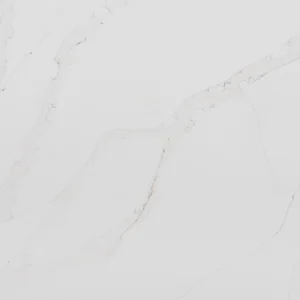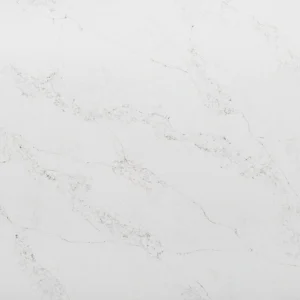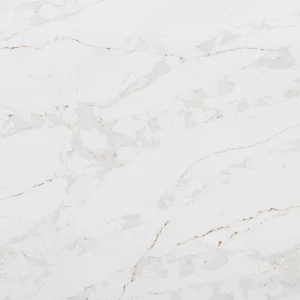



Stone media walls have moved from being a niche specification to one of the most requested features in contemporary living room and snug renovations across the UK, and most of the design advice available focuses on the carpentry and electrical side without addressing the material choice properly. A media wall in stone is a different proposition from a plastered-and-painted version, and the material choice affects everything from acoustics to heat behaviour to the long-term appearance of the wall. After fabricating and installing media walls across high-end residential projects from our Pudsey workshop, we know which materials genuinely work in this application and which ones look great in renders but disappoint in practice.
The industry reality
Media walls have evolved rapidly. The original concept was a flat wall with a recessed television and a few cabinets below, typically finished in plasterboard and painted. The current generation is closer to architectural feature walls, with stone or porcelain cladding, integrated electric fireplaces, concealed lighting, and bespoke cabinetry that treats the wall as the focal point of an entire room.
The shift toward stone-clad media walls has been driven by several factors. Open-plan extensions have created larger rooms where a feature wall has space to breathe. Electric fireplaces have become a standard inclusion, and stone surrounds suit fireplaces better than painted plasterboard. Television sizes have grown to the point where the wall behind needs visual weight to balance the screen.
The challenge is that most of the suppliers offering media walls are joinery and carpentry specialists, not stone fabricators. The stone element often gets specified after the design is finalised, which produces compromises that wouldn’t exist if the material had been considered from the start. The points below cover what actually matters when stone is the right answer.
What actually matters in a stone media wall
Heat behaviour around electric fireplaces
This is the consideration most often missed at design stage. Electric fireplaces produce real heat, both from the heating element itself (if the unit has one) and from the LED flame effect components. The wall material directly above and around the fireplace needs to tolerate this heat without discolouration or damage.
Engineered quartz is not generally recommended for use directly above electric fireplaces by any major manufacturer. The resin in the slab can yellow or scorch under prolonged exposure to the heat output, even from electric units that produce far less heat than a real fire. The failure typically shows up after one or two heating seasons.
Natural stone (granite, quartzite, marble) handles fireplace heat without restriction. The slab itself is unaffected by the temperatures involved.
Dekton and porcelain are fully heat-stable and suit fireplace applications without compromise.
If the media wall design includes an electric fireplace, the material choice needs to be specifically rated for fireplace surround use. Treating it as a standard wall installation is the most common source of problems we see.
Slab dimensions and how they affect the design
Media walls are usually taller and narrower than typical worktop installations. A wall reaching from floor to ceiling in a modern open-plan room is often 2.4 to 3 metres tall, which is close to the maximum slab dimension for most materials.
Standard granite and quartz slabs run roughly 3.0 to 3.2 metres long by 1.5 to 2.0 metres wide. A floor-to-ceiling media wall in single-piece material is possible up to standard slab heights, but exceeding those dimensions requires either large-format material (available in some Dekton and porcelain ranges up to 3.4 metres or more) or visible joins.
Joins on vertical surfaces are more visible than joins on horizontal worktops because the eye reads vertical lines differently. If the design calls for a continuous appearance, the slab dimensions need to be planned at design stage rather than discovered at fabrication.
For very tall walls, porcelain panels in large-format sizes (some now reaching 3.6 metres or more) are often the practical answer, with the panels selected to allow joins to fall at architectural transitions rather than mid-surface.
Pattern selection and how stone reads vertically
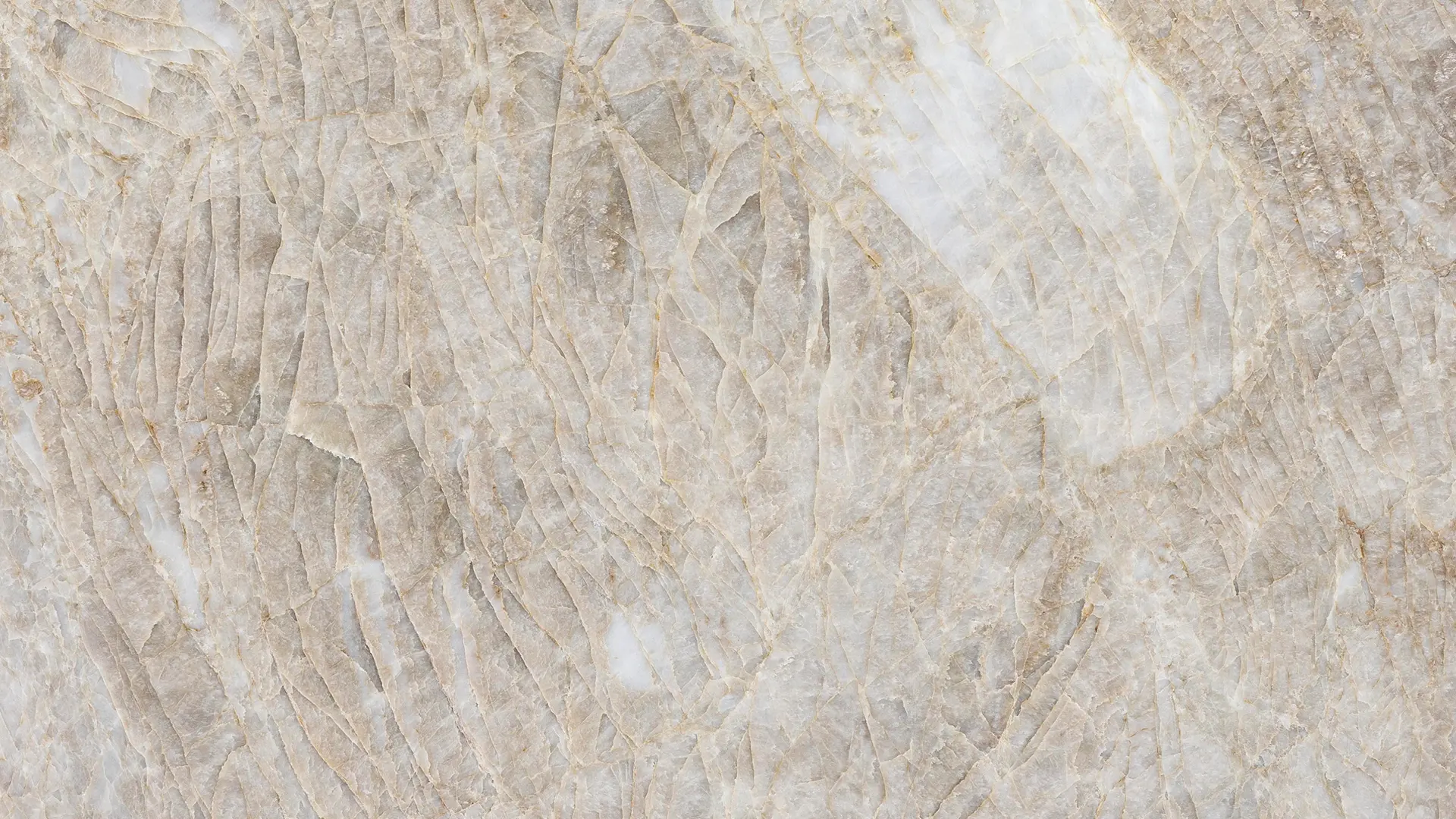
Stone patterns read differently on vertical surfaces than on horizontal ones. A Calacatta-style veining pattern that flows beautifully across a horizontal worktop can look directional and uneven on a vertical wall, depending on how the slab is oriented.
This is a design decision that benefits from being made in front of a real slab rather than from a sample. We typically lay slabs vertically in our showroom when customers are choosing for media wall applications, so they can see how the pattern reads in the actual orientation the finished installation will use.
Stones with strong directional veining (some quartzite varieties, certain dramatic granites) need careful slab selection and rotation to look right on a vertical wall. Stones with more uniform character (engineered quartz with subtle patterns, plain granites, solid-tone Dekton) are more forgiving in this regard.
For media walls specifically, we encourage customers to view full slabs in vertical orientation before committing.
Mounting weight and the structural question
Stone media walls add significant weight to a wall structure. A floor-to-ceiling slab in 20mm granite or quartz can weigh 200kg or more depending on dimensions, and the supporting structure behind needs to handle that load.
Standard plasterboard partitions are generally not adequate to support stone cladding directly without reinforcement. Solid masonry walls and reinforced timber frames typically can support stone cladding with appropriate mechanical fixings or adhesive systems.
The fabricator and the carpenter (or builder) need to coordinate on the substrate. Installing stone onto an unsuitable substrate produces a wall that may look fine on installation day but develops problems over time as the support flexes or settles.
We discuss substrate requirements at quote stage on media wall projects and won’t proceed with installation onto substrates we consider inadequate. This isn’t being awkward; it’s avoiding a predictable failure.
Edge details and how the wall meets surrounding surfaces
The edges of a media wall (where the stone meets the floor, the ceiling, the adjacent walls, and any built-in cabinetry) are where the installation either looks resolved or looks unfinished.
A polished slab cut to a precise dimension and butted directly against a finished wall produces the cleanest result, but requires accurate templating of all surrounding surfaces. A slab finished with a small reveal or a slim shadow gap allows tolerance for slight discrepancies but produces a different aesthetic.
For installations where the media wall sits within a recess (between cabinetry on either side, for example), the stone needs to be cut precisely to fit, and any movement in the surrounding cabinetry over time will show against the rigid stone surface.
For installations where the media wall sits as a standalone surface against a flat wall, the edges become visible features. The edge profile (sharp square, slight chamfer, polished or honed finish on the cut face) affects how the wall reads from oblique angles.
We discuss edge details with customers at templating stage on media wall projects, because the choices made there shape the finished result more than most design decisions on the project.
Television mounting and the practical reality
Most media walls include a wall-mounted television. The mounting needs to attach to something solid behind the stone, not to the stone itself.
The practical solution is mounting the bracket to the substrate behind the stone, with cable management routed through carefully positioned holes in the slab. The holes need to be cut precisely (typically at fabrication stage based on the mounting position and cable routing requirements) because cutting them on site after installation is far more difficult.
This requires coordination between the audiovisual specialist, the carpenter, and the stone fabricator. We provide templating services that include the television mounting and cable routing positions, with cutouts fabricated to the dimensions the AV installer specifies.
When this coordination doesn’t happen, the alternative is either visible cable runs on the surface of the stone (which looks unfinished) or post-installation drilling that risks chipping the slab. Planning at fabrication stage is far better than improvising on installation day.
Real scenarios from media wall installations
A property in Harrogate had a contemporary lounge with a 4-metre wide feature wall designed to integrate an electric fireplace, a 75-inch television, and recessed shelving for media equipment. We supplied a single large-format Dekton panel for the main wall surface, with the fireplace and television positions cut precisely at fabrication stage. The completed wall reads as a single architectural surface with no visible joins or compromises.
A renovation in Leeds replaced a traditional fireplace with a contemporary media wall design. The original chimney breast provided a solid masonry substrate suitable for stone cladding. We installed a book-matched quartzite across the main wall surface with the veining flowing symmetrically across the central focal point, producing a feature that the rest of the room is organised around.
A new-build extension in Manchester included a snug area with a smaller-scale media wall, approximately 2.5 metres wide. The customer had initially specified engineered quartz, not realising the electric fireplace planned for the lower section would create heat issues. We switched the specification to a granite with similar visual character and a leathered finish, which handles the fireplace heat without restriction and reads as the intended design.
The questions worth asking before you commit
If you’re planning a stone media wall, the answers to these will tell you whether the supplier understands the application:
Is the material being recommended specifically suitable for use above an electric fireplace, if the design includes one?
What slab dimensions are available in the chosen material, and will the wall require a join?
How is pattern orientation being planned? Can I see the slab in vertical orientation before fabrication?
What’s the substrate behind the wall, and is it suitable for the weight of stone cladding?
Will fabrication include the television mounting and cable routing cutouts? How is this coordinated with the AV installer?
Suppliers who answer these clearly are ones who’ve installed stone media walls before. Suppliers who treat the application as essentially the same as a worktop are usually missing the considerations that matter.
How Meridian Granite handles media wall installations
We supply and fit stone media walls alongside our kitchen and bathroom services, working with granite, quartz, quartzite, Dekton, and large-format porcelain depending on the specific design requirements. Our showroom in Pudsey holds full slabs that can be viewed in vertical orientation for media wall applications.
Fabrication is in-house, and we coordinate with carpenters, AV installers, and electricians on multi-trade projects to ensure mounting positions, cable routes, and substrate requirements are properly handled. For installations with electric fireplaces, we specifically recommend heat-stable materials and won’t supply quartz for direct fireplace surrounds.
Conclusion
Stone media walls deserve more attention to material choice than they typically receive. The heat behaviour around electric fireplaces, the slab dimensions for taller surfaces, the pattern orientation on vertical walls, the substrate requirements for the weight of the stone, and the integration with television mounting all matter more than they would on a horizontal worktop installation.
Done well, a stone media wall becomes the architectural focal point of a contemporary living space. Done without proper material consideration, it can develop visible problems within a year or two of installation. The honest answer is that the application benefits enormously from being treated as a specific specialist installation rather than as a generalised stone surface.
If you’d like to view media wall materials in vertical orientation and discuss the specifics of your design, our Pudsey showroom is open and our team is happy to walk through the choices in detail.