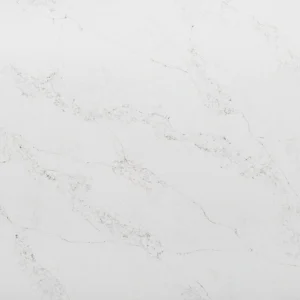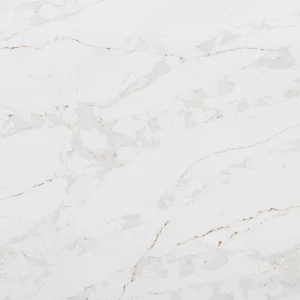



Stone vanity surfaces are an area of bathroom design where most homeowners default to whatever the bathroom showroom is offering, and the conversation about material choice rarely gets the depth it deserves. The bathroom worktop sits in a different environment from the kitchen worktop, faces different daily challenges, and benefits from a different approach to material selection. After supplying and fitting bathroom vanity surfaces across high-end and standard renovations from our Pudsey workshop, we know which choices stand up over years of bathroom use and which ones disappoint within a renovation cycle.
The industry reality
Bathroom worktops are typically smaller, more visible, and used differently from kitchen worktops. The daily reality involves constant water contact, cosmetics, hair products, toothpaste, perfume, and a cleaning regime that often involves more aggressive products than would ever be used in a kitchen.
Most bathroom showrooms offer a limited range of worktop materials, typically two or three engineered quartz options and perhaps a ceramic alternative, supplied alongside the vanity unit as part of a package. This works for many installations, but it limits the conversation to a narrow set of options and doesn’t always produce the best result for the specific bathroom.
The points below are what actually matters in a bathroom worktop, and where the choice can be improved by looking outside the standard packaged offering.
What actually matters in a bathroom vanity surface
Constant water contact and what it does to natural stone
Bathroom worktops are exposed to water continuously throughout the day. Taps splash. Wet hands rest on the surface. Toothbrushes drip. Hot showers raise humidity to levels that don’t occur in any other room.
This affects material selection in ways that aren’t always discussed. Granite is porous and benefits from sealing, but bathroom granite is typically used less intensively for cooking-style contamination, so the sealing schedule can be lighter than in a kitchen. Marble (which we don’t generally recommend for bathrooms despite its visual appeal) is sensitive to water minerals over time and can develop dull patches around taps.
Engineered quartz is essentially non-porous and handles constant water contact without issue. This is one area where quartz genuinely outperforms most natural alternatives.
Dekton and porcelain surfaces handle water without restriction, and offer the additional benefit of being thinner than traditional stone options, which suits the proportions of many vanity units.
Cosmetics, perfumes, and the chemical challenge
Bathroom worktops face chemical exposure that kitchens rarely see. Nail polish remover, perfume, aftershave, hair dye, sunscreen, certain skincare products, and acidic toiletries all contain ingredients that can affect stone surfaces.
Engineered quartz resists most of these without issue, though prolonged contact with hair dye can occasionally stain pale colours and is worth wiping off promptly.
Granite is generally robust against bathroom chemicals when sealed properly, but acidic products can etch the polished surface if left for extended periods. The same is true of polished marble, more severely.
Dekton is highly resistant to chemical exposure across the range of products found in a typical bathroom, which is one of the reasons it’s often specified for high-traffic hotel and commercial bathrooms.
This isn’t a reason to avoid natural stone in a bathroom. It’s a reason to think about which household members will use the bathroom and what they’ll be using on the surface daily.
Cleaning products and the maintenance reality
Bathroom cleaning often involves more aggressive products than kitchen cleaning. Bleach-based bathroom sprays, descaling products around taps, and acidic limescale removers are commonly used, and they’re not always compatible with stone surfaces.
Acidic descalers will etch polished granite, marble, and quartzite over time. Bleach can affect quartz resin in some lower-grade products, though premium brands resist it. Generic bathroom sprays often contain ingredients that aren’t ideal for any stone surface used long-term.
The practical solution is stone-safe cleaning products, which are inexpensive and effective but require a household to use them consistently rather than reaching for whatever’s under the sink. We provide written aftercare guidance with every installation, which addresses this directly.
For households that genuinely won’t use specific products, materials that tolerate aggressive cleaning (Dekton particularly) make sense. For households happy to use stone-safe products, any of the premium materials work.
Slab thickness and the proportions of bathroom design
Bathroom vanity units are typically lower and smaller than kitchen cabinetry, and the worktop sits in different visual proportions. A 30mm worktop that looks balanced in a kitchen can look chunky on a compact bathroom vanity.
Most engineered quartz and natural stone is supplied in 20mm or 30mm thickness. For bathroom installations, 20mm is often the more elegant choice unless the design specifically calls for a heavier presence.
Dekton and porcelain offer 12mm options, which look genuinely refined on bathroom vanities and allow design touches (slim overhangs, matching upstands, full-height splashbacks in the same material) that thicker materials struggle to achieve. This is one of the areas where the thinner alternatives have a clear design advantage in bathroom applications.
Cutouts for sinks, taps, and the precision they require
Bathroom worktops typically include cutouts for one or two basins and corresponding tap holes. The precision of these cutouts is more visible than in a kitchen, because bathroom worktops are smaller, the basin is the focal point, and the gap (or lack of gap) between the worktop and basin is at eye level.
Undermount basins (where the basin sits below the worktop with no visible rim) require particularly precise cutouts because the worktop edge becomes part of the visible basin opening. The radius of the corners, the polish of the cut edge, and the cleanness of the line all show in the finished installation.
Inset basins (where the basin sits within the worktop with a visible rim) are more forgiving but still benefit from precise cutout work to avoid visible silicone gaps.
This is one of the areas where fabrication quality genuinely matters more in a bathroom than in a kitchen. We carry out cutouts on CNC machinery for precision, polish the cut edges to match the worktop finish, and check the basin fit before final installation.
Matching splashbacks, upstands, and full-height surfaces
Bathroom design increasingly involves matching material across multiple surfaces: the worktop, the splashback behind the basin, full-height shower walls in the same stone, and sometimes the floor.
This visual continuity produces stronger finished bathrooms when handled well, but it requires the supplier to coordinate multiple surface elements from compatible material. Sourcing additional slab from the same block ensures pattern continuity, which matters most for stones with distinctive veining or movement.
For full-height shower wall applications, large-format porcelain or Dekton typically performs best because the panels can be sized to minimise joints. Natural stone is possible but produces more visible seams across taller surfaces.
We discuss matching-surface options at quote stage when bathroom designs call for them, because the planning needs to happen before fabrication rather than after.
Real scenarios from bathroom installations
A property in Leeds had a master bathroom designed around a freestanding bath and a long twin-basin vanity unit. The owners wanted a natural stone worktop with strong visual character. We sourced a single large quartzite slab and book-matched the cut sections across the vanity, with matching upstands behind. The veining flows continuously across the surface, and the bathroom reads as a single coordinated design rather than a vanity sitting in a room.
A family bathroom in Pudsey needed a worktop that would handle daily use by children alongside cosmetic use by adults. We installed a mid-range engineered quartz in a calm pattern that disguises light marks, with rounded corners on the basin cutouts to suit a younger household. Five years on, the worktop is in essentially unchanged condition.
A high-end ensuite in Harrogate called for a 12mm Dekton worktop with a matching full-height wall behind the basin and continuing into the adjacent shower enclosure. The thin slab and the continuous surface produced a contemporary look that thicker materials couldn’t have achieved, and the chemical and water resistance suits the daily use.
The questions worth asking before you commit
If you’re planning a stone vanity surface, the answers to these will help you avoid the common mistakes:
What products do household members use on the worktop daily, and which of those need careful material choice?
What cleaning routine is realistic, and does the recommended material suit that routine?
Is the design calling for matching splashbacks, upstands, or full-height surfaces, and how will continuity be handled?
For undermount basins, can the fabricator show examples of finished cutout work?
Is 20mm or 30mm thickness more suitable for the proportions of the vanity unit?
Suppliers who consider these questions in detail are ones who treat the bathroom as a specific environment rather than a smaller version of a kitchen. Suppliers who recommend the same approach for both rooms are usually missing what makes bathroom worktops different.
How Meridian Granite handles bathroom vanity installations
We supply and fit stone vanity surfaces alongside our kitchen worktop service, with the same in-house fabrication and installation process. Customers can view full slabs across granite, quartz, quartzite, and Dekton in our Pudsey showroom and discuss specific bathroom applications including matching splashbacks, full-height walls, and undermount basin cutouts.
For high-end bathroom projects, we coordinate with bathroom designers and architects to source matching material across multiple surfaces and plan fabrication to minimise visible joints. Our installation teams handle the precision work that bathroom cutouts require, including the radii and polished edges that show in the finished installation.
Conclusion
Stone vanity surfaces deserve more consideration than the standard packaged-with-vanity-unit approach allows. The bathroom is a specific environment with specific demands, and the right material choice depends on which surfaces, which household, and which cleaning routine is involved.
For most bathrooms, premium engineered quartz remains an excellent default. For high-end designs calling for distinctive character, natural quartzite or matching Dekton surfaces extend what’s possible. For contemporary minimal designs with continuous material across multiple surfaces, thinner Dekton and porcelain options expand the design palette.
If you’d like to see bathroom vanity options in person and discuss what suits your specific renovation, our Pudsey showroom holds full slabs and our team is happy to walk through the choices in detail.